
Discover & Define
The challenge
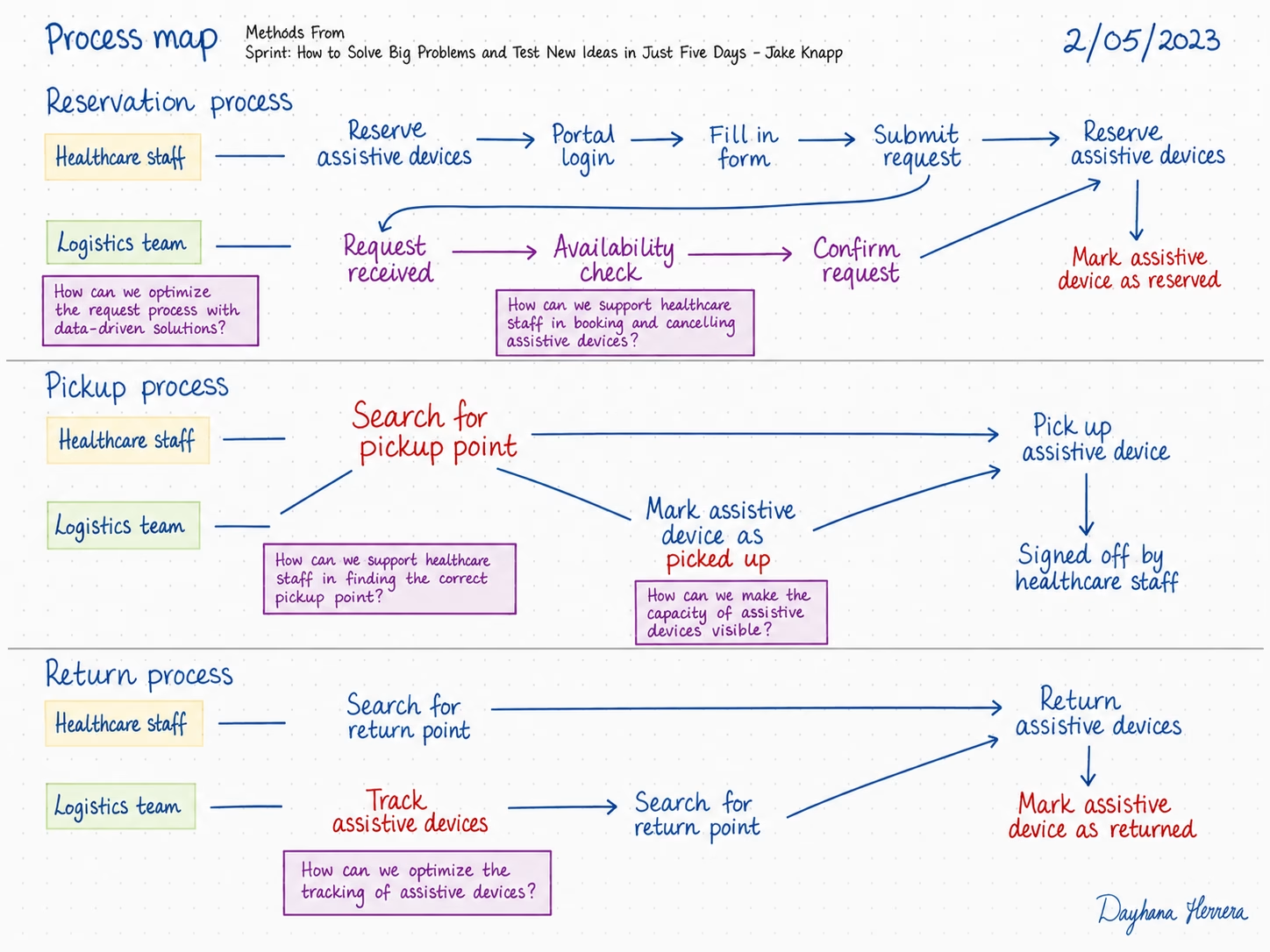
The existing return process for medical equipment depended heavily on manual administration and fragmented communication.
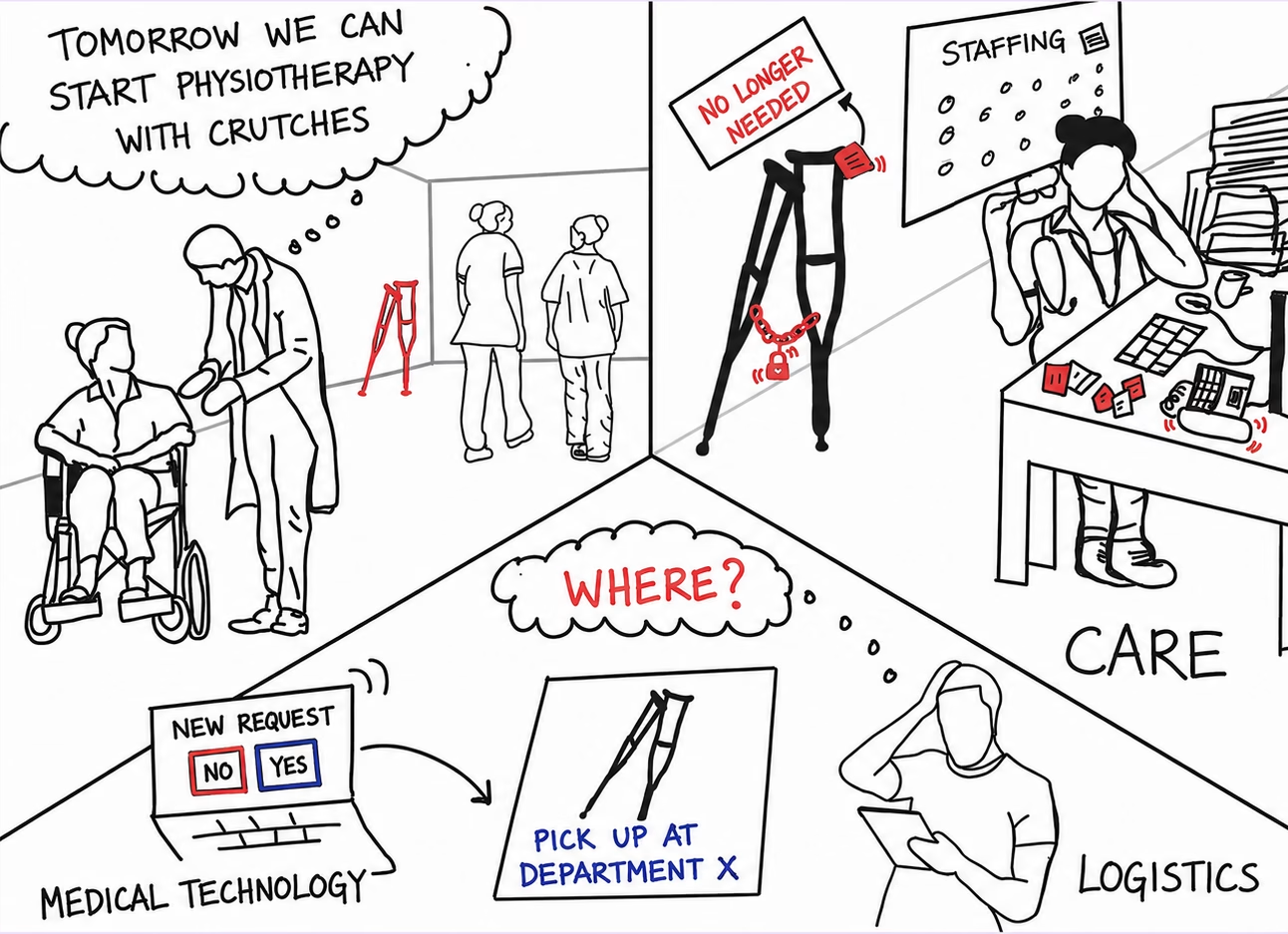
Equipment requests were submitted through an intranet form, processed manually by Medical Technology, and communicated to the logistics department via phone calls and emails. Meanwhile, departments worked independently, often without visibility into each other's processes.
This resulted in: - Lost medical equipment. - Duplicate transportation requests. - Manual administrative work. - Communication silos between departments. - Limited visibility into available equipment. - Delays in delivering urgently requested medical devices.
As a team, our goal was to understand why these problems occurred before designing a solution.
Our approach
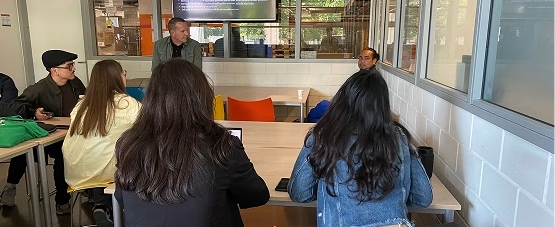
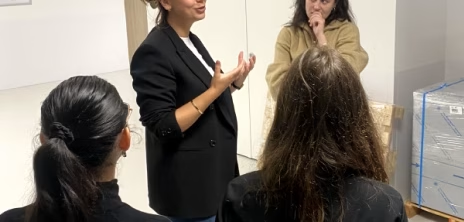
To understand the complete workflow, we conducted several research activities together as a team.
These included: - Stakeholder interviews. - Interviews with logistics employees. - Contextual observations inside Erasmus MC. - A guided walkthrough of the complete return process. - Desk research. - Technical feasibility research with experts. - Affinity Mapping. - 5 Whys Analysis. - User Personas.
Observing the logistics department in their daily work proved especially valuable. It allowed us to understand not only the official process but also the informal workarounds employees had developed over time.
Key findings
Our research revealed several recurring themes.
Healthcare professionals often worked under significant time pressure, leaving little opportunity to complete administrative return forms.
Because equipment returns were not consistently registered, Medical Technology frequently believed equipment was unavailable, even when it had already been returned somewhere else in the hospital.
Communication between departments was fragmented, with every department focusing primarily on its own responsibilities instead of the overall equipment flow.
The logistics department handled many requests that needed to be completed within one hour, making real-time information essential for effective planning.
Healthcare professionals also lacked confidence in the return process because it was unclear how borrowed equipment should be returned and why timely returns were important.
Finally, we discovered that experienced logistics employees already optimized their own walking routes using practical knowledge such as elevator peak hours, stairwell locations, and informal collection points. This insight later became important during usability testing.
Idea generation
From findings to solution
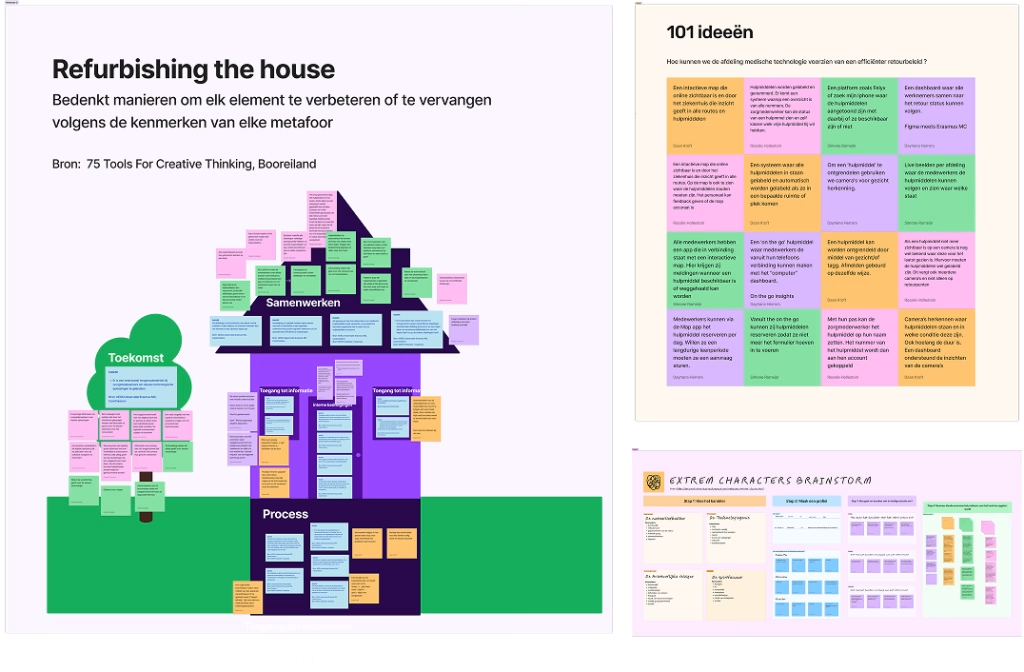
Using the research insights, our team explored a wide range of potential solutions through structured brainstorming sessions.
Methods included: - Extreme Characters - 101 Ideas - Refurbishing the House - COCD Box - Concept Clustering
After evaluating the concepts together with CareCreators, two promising directions were selected. These ideas were combined into one integrated concept called TaskCare.
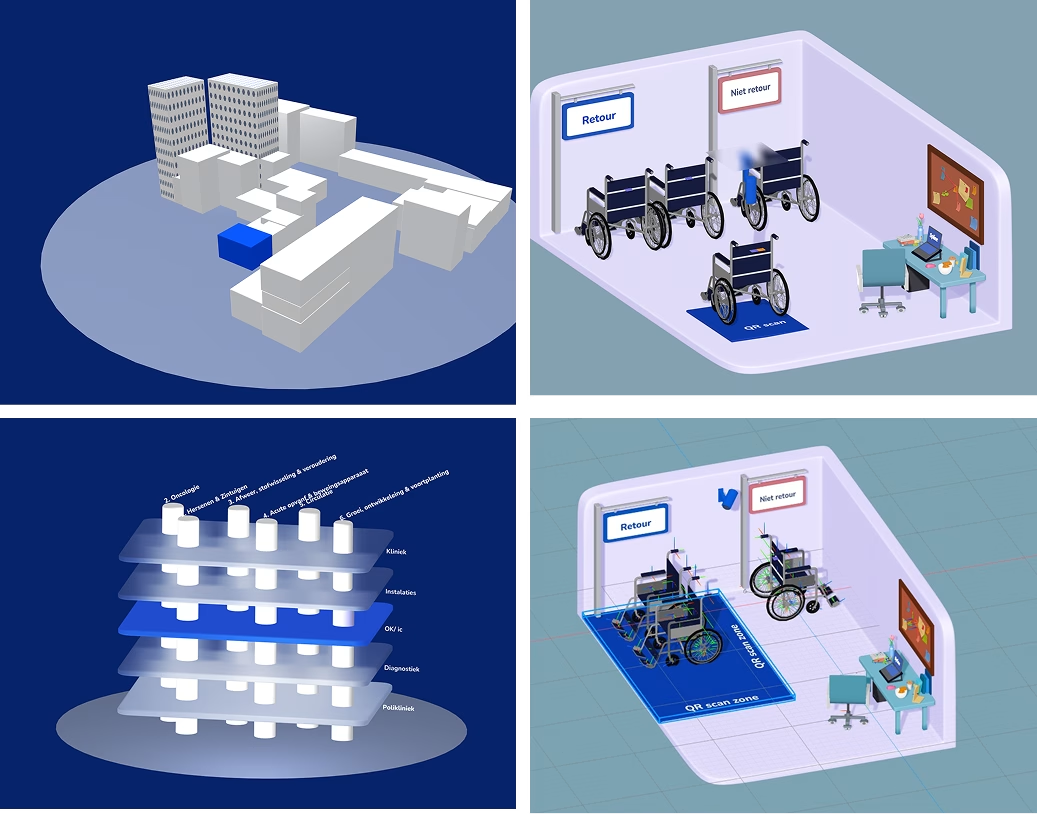
The concept proposed a centralized platform supported by QR-code scanning technology located at hospital return stations.
Instead of relying on paperwork and manual communication, equipment could automatically register itself when returned, allowing logistics employees to immediately see where equipment was located and what actions required attention.
UX Design
Turning Research into Interfaces
My role within the project focused on designing the user experience of TaskCare.
Based on the research findings, I translated complex logistics workflows into intuitive digital experiences that minimized cognitive load while supporting rapid decision-making.
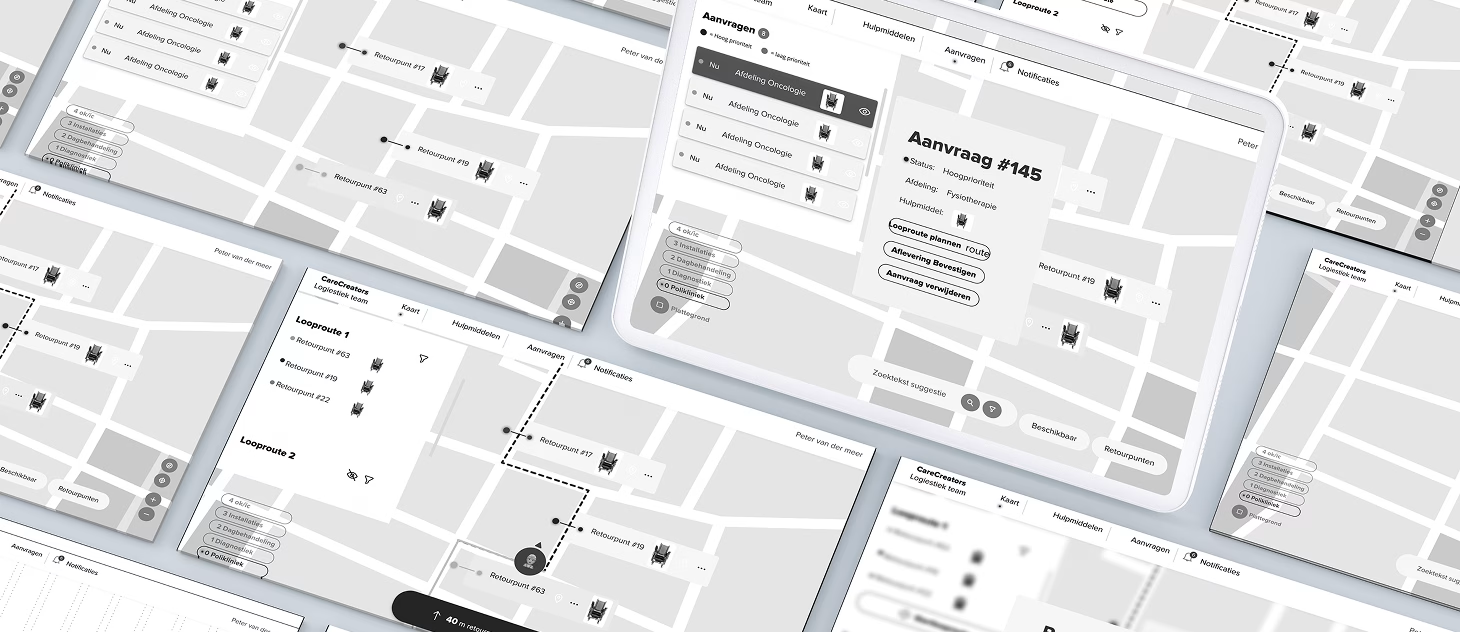
The first wireframes were created around the Jobs to Be Done framework, ensuring every screen supported a real task performed by logistics employees.
The platform was designed around several key activities:
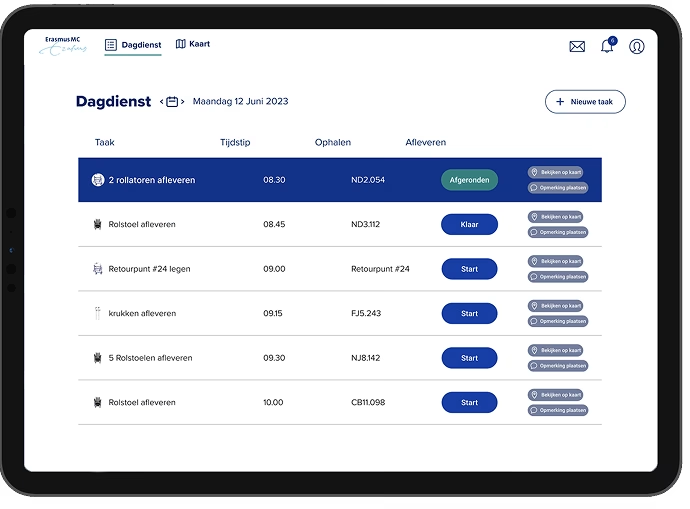
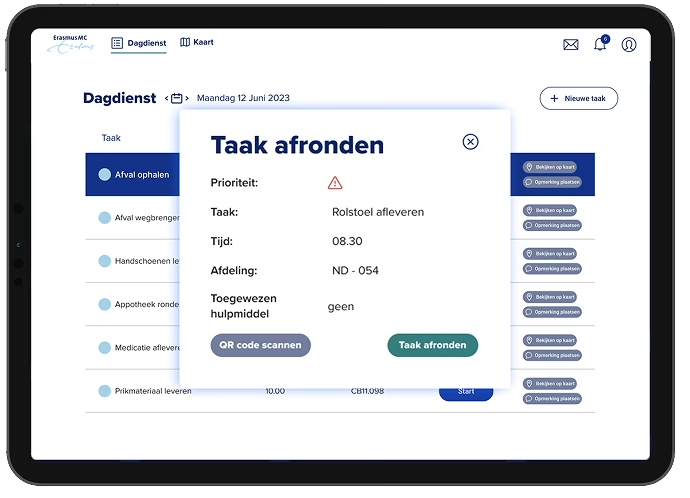
- Managing collection tasks. - Viewing equipment status. - Locating medical equipment. - Monitoring return points. - Communicating with departments. - Prioritizing urgent requests.
The emphasis throughout the design process remained on reducing administrative effort rather than introducing additional complexity.
Visual design
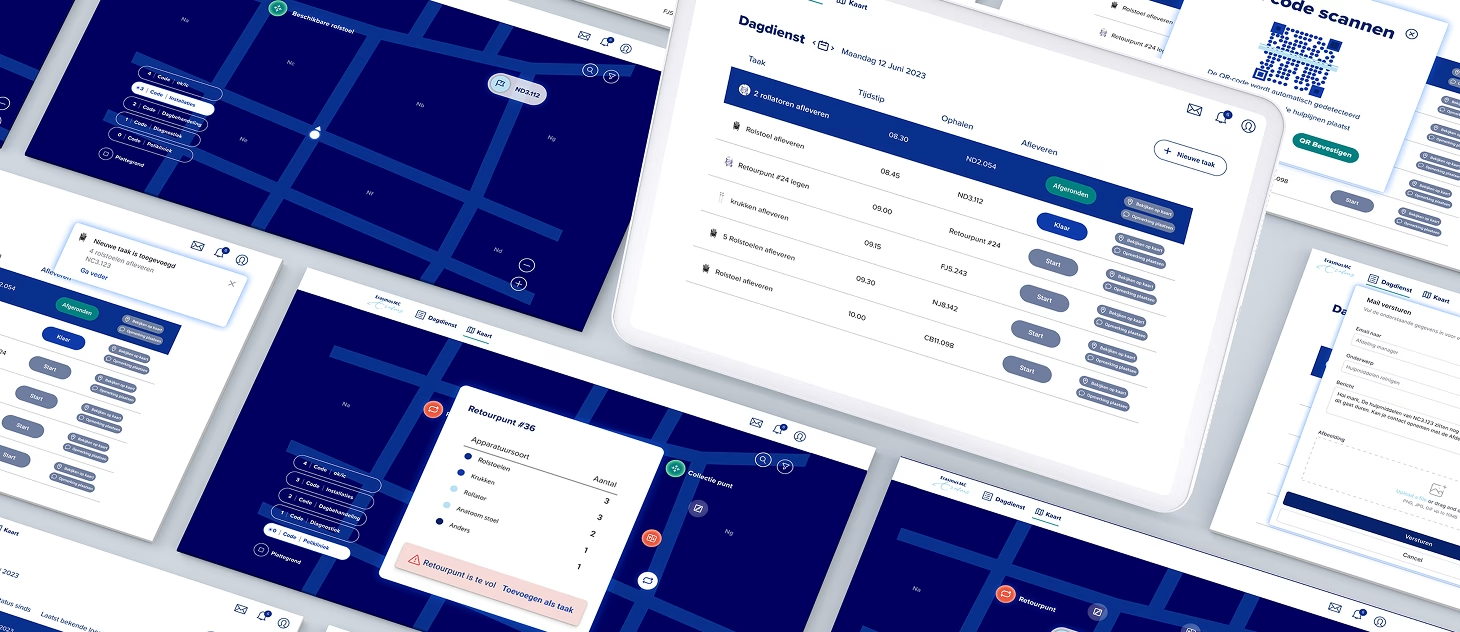
After the user flows and interaction patterns had been established, I designed the final visual interface for the platform.
This included developing:
- The color palette. - Typography system. - Visual hierarchy. - Status indicators. - Dashboard layouts. - UI components. - Reusable design patterns.
The visual language was intentionally clean and minimal to support healthcare professionals working in high-pressure environments where information must be understood within seconds.
The interface balances accessibility, clarity, and consistency while laying the foundation for a scalable design system.
Testing and iteration
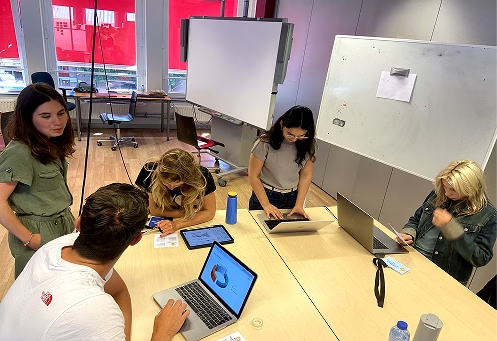
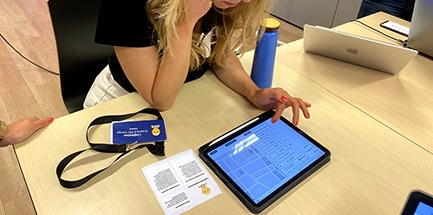
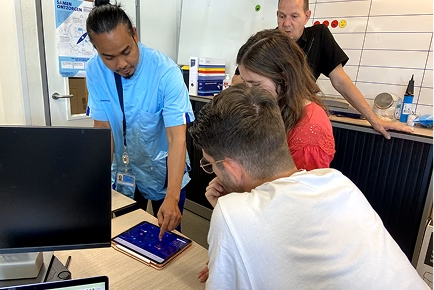
The high-fidelity prototype was evaluated through usability testing using realistic logistics scenarios.
Participants completed tasks such as locating equipment, checking task details, reviewing updates, and communicating with other departments.
The testing validated many design decisions while also revealing opportunities for improvement.
Key conclusions
One of the first concepts included suggested walking routes through the hospital.
Testing quickly showed this feature added little value because experienced logistics employees already knew the hospital extremely well and continuously optimized their own routes.
As a result, the routing feature was removed from the final concept.
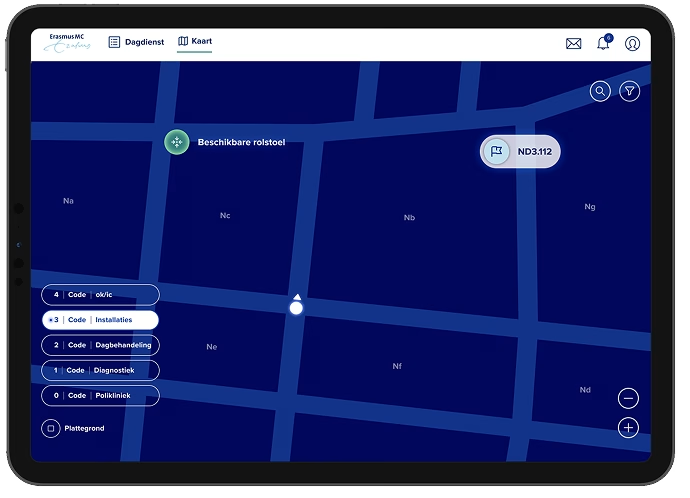
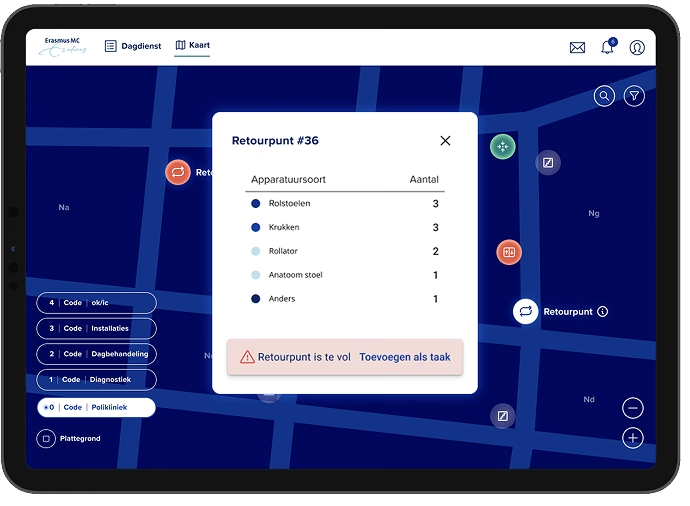
The prototype also included an interactive floor plan.
Participants explained they rarely needed a map because they already knew every department by heart. Instead, they preferred immediate access to equipment status and task information.
The floor plan therefore became a secondary feature.
Usability testing also showed that several icons were difficult to recognize without accompanying labels.
The interface was refined by increasing icon size, improving contrast, and adding descriptive text to reduce ambiguity.
Finally, participants wanted more control over communication.
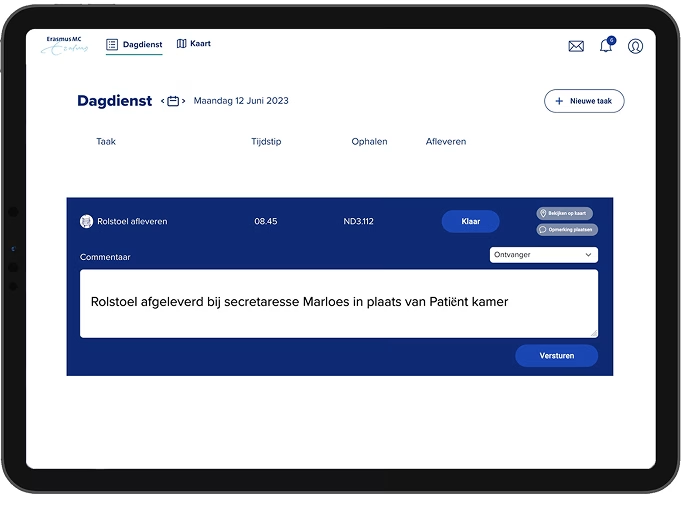
Rather than automatically messaging predefined recipients, users preferred choosing exactly which colleague or department they wanted to contact.
This resulted in a more flexible communication flow within the final prototype.
The solution
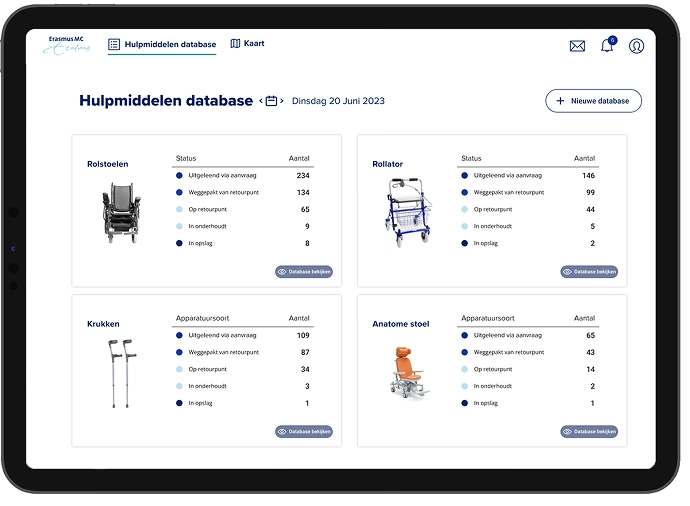
TaskCare combines QR-code technology with a centralized digital platform to simplify the complete return process for medical equipment.
Medical devices are equipped with QR codes, while return stations automatically register equipment using scanning cameras.
This creates a continuously updated overview of equipment availability without requiring healthcare staff to complete manual return forms.
Logistics employees receive: - A live task overview. - Real-time equipment status. - Equipment locations. - Return point visibility. - Integrated communication. - Automatic return registration.
By reducing manual administration and improving transparency, TaskCare supports faster decision-making and more efficient collaboration across departments.
Reflection
This project strengthened my ability to design complex digital products within multidisciplinary teams and stakeholder-rich environments.
Working closely with researchers, technical experts, healthcare professionals, and logistics employees taught me how to translate operational challenges into intuitive user experiences.
Most importantly, it reinforced that successful UX is not about adding more features. It is about understanding what users truly need, validating assumptions through research, and designing solutions that fit naturally into existing workflows.
Key Outcomes: - Conducted user-centered research with logistics employees and stakeholders. Designed the UX for a healthcare logistics platform as part of a multidisciplinary student team. - Created intuitive user journeys based on operational workflows. - Designed the final visual interface, including color palette and typography. - Simplified complex logistics processes into clear digital interactions. - Applied design system principles to ensure consistency and scalability. - Validated the solution through usability testing and iterative improvements. - Developed a concept that reduces administrative work, increases equipment visibility, and improves communication between hospital departments.